
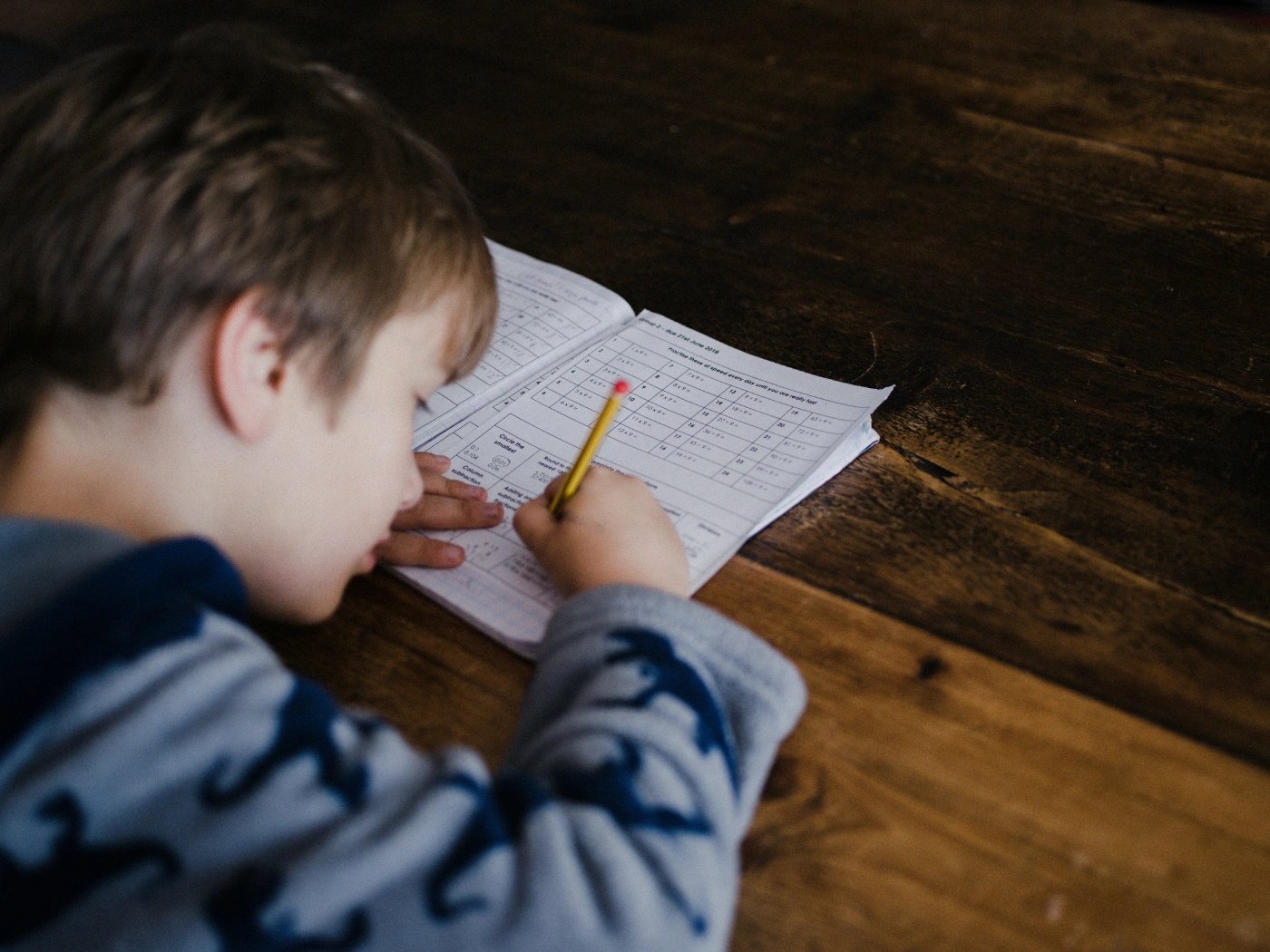
One of the most common questions parents bring to preschool orientation sessions is about writing. Should my child already be holding a pencil? Is it too early to practise letters? What does it mean that their friend is already writing their name and my child shows no interest at all?
The honest answer is that writing readiness varies widely between children and is shaped by much more than age. Educators at the best Montessori schools in Bangalore consistently observe that children who are pushed to write before they are physically and neurologically ready often develop habits that are harder to correct later, while children who are supported through the preparatory stages arrive at formal writing with confidence and control.
What Writing Readiness Actually Means
Writing is a complex skill that draws on several independent systems simultaneously: fine motor control in the fingers and hand, hand-eye coordination, core muscle strength for sitting stability, the ability to hold and direct a pencil, visual memory for letter shapes, and the cognitive understanding that marks on paper carry meaning.
A child who lacks strength in any of these areas will find writing physically effortful and frustrating. That frustration is not a character trait or a sign of future difficulty. It is developmental feedback that the underlying systems need more time and more play-based preparation.
The goal during the preschool years is not to teach formal letter formation. It is to build the physical, perceptual, and cognitive foundations that make formal letter formation easy and natural when the time is right.
The Role of Fine Motor Skills
Fine motor development is the most direct predictor of writing readiness. The small muscles of the fingers, hands, and wrists need to be strong, coordinated, and precise enough to control a pencil across a surface, repeatedly, for an extended period without fatigue.
These muscles are built through activities that children engage in naturally during play: tearing paper, squeezing playdough, threading beads, picking up small objects, building with blocks, pouring and scooping, using child scissors, and manipulating fasteners like zips and buttons. None of these activities look like writing practice, but each one contributes directly to the muscle strength and coordination that writing requires.
A useful observation is whether a child can pick up a small raisin using only their thumb and index finger in a pincer grip. This is the same grip used to hold a pencil. Children who have not yet developed a reliable pincer grip are not yet physically ready for formal pencil work, regardless of their age.
Pencil Grip: How It Develops
The Whole-Hand Stage
Very young children hold a crayon or marker in their whole fist, with the writing implement pointing down from the bottom of the hand. This is developmentally appropriate for two to three year olds and should not be corrected. It reflects the current state of their fine motor development, not a bad habit.
The Tripod Grip
As fine motor skills develop, children gradually move toward the tripod grip: the pencil resting on the middle finger, controlled by the thumb and index finger, with the other fingers curled loosely underneath. Most children settle into this grip naturally between the ages of four and five, though there is significant variation.
Forcing a child into a tripod grip before the underlying muscle strength is there tends to produce tension and discomfort rather than control. The right approach is to build the foundational strength through play and let the grip develop as readiness arrives.
Signs That a Child Is Ready to Begin Writing
Rather than using age as the primary indicator, look for these developmental signs:
- Shows interest in making marks, drawing pictures, or ‘writing’ during play
- Can hold a pencil or crayon with reasonable control, not necessarily a full tripod grip
- Draws recognisable shapes: circles, lines, crosses, and simple faces
- Asks what words say or shows curiosity about print in books and around them
- Has the sitting stamina to sustain a focused activity for five to ten minutes
- Can follow simple two-step instructions reliably
At the best pre school in Bangalore, teachers observe these indicators continuously rather than using calendar age alone as a trigger for introducing formal writing. This approach ensures that each child’s experience is appropriate to where they actually are, not where the curriculum calendar says they should be.
What Preschool Writing Activities Actually Look Like
Developmentally sound preschool writing preparation does not look like sitting at a desk with a worksheet. It looks like a wide variety of activities that build the components of writing without the pressure of performing a formal skill.
Pre-Writing Activities
Pre-writing activities develop the physical and perceptual skills writing depends on:
- Drawing freely on large paper with a variety of tools: fat crayons, chalk, paint, markers
- Tracing lines, curves, and patterns on sand trays or textured surfaces
- Threading beads, pegboards, and lacing cards
- Cutting along lines with safety scissors
- Finger painting and clay modelling for hand strength
- Completing simple mazes and dot-to-dot activities
Early Writing Experiences
When children begin to show readiness, early writing experiences should feel purposeful and satisfying rather than corrective:
- Writing their own name, typically the first word children are motivated to write
- Labelling drawings with a letter or two representing the content
- Contributing to simple lists or cards with adult support
- Tracing letters in a variety of media, sand, paint, or textured boards, before moving to paper and pencil
When to Be Patient and When to Seek Advice
There is a wide range of normal in writing development. A child who is not writing letters at four years old is not behind. A child who shows no interest in mark-making at all, or who has significantly limited fine motor control compared to peers of the same age, is worth discussing with their preschool teacher or paediatrician. Early assessment is far more useful than waiting to see whether the difficulty resolves itself.
Some children experience specific challenges with fine motor development due to hypermobility, developmental coordination disorder, or other factors that respond well to early occupational therapy intervention. Identifying these early makes a substantial difference to how the child progresses through primary school.
The Developmental Timeline at a Glance
The table below summarises the typical developmental milestones in writing preparation and what parents can do at each stage to support the process.
Age Range | What Children Typically Develop | How to Support at Home |
2 to 3 years | Whole-hand grip; scribbling and mark-making | Provide chunky crayons, playdough, finger painting |
3 to 4 years | Improved grip; drawing recognisable shapes and faces | Encourage drawing, tracing, and bead threading |
4 to 5 years | Tripod grip emerging; writing name, simple letters | Dot-to-dot books, letter tracing, cutting activities |
5 to 6 years | Consistent letter formation; beginning to write words | Short writing activities with meaningful purpose |
What Parents Should Avoid
A few well-intentioned approaches that research consistently shows are unhelpful:
- Drilling letter formation before the child has the fine motor control to produce it comfortably
- Correcting pencil grip repeatedly when the child is still building the underlying muscle strength
- Comparing the child’s progress to siblings, classmates, or benchmarks that do not account for individual variation
- Using writing as a reward or punishment, which attaches negative associations to a skill the child needs to feel confident about
- Over-scheduling structured academic activities at the expense of the unstructured play that actually builds writing readiness
Key Takeaways
- Writing readiness is not primarily about age; it is about the development of fine motor skills, grip, coordination, and a foundational understanding of print
- The tripod grip develops naturally as fine motor strength grows and should not be forced before that strength is present
- Play-based activities, playdough, threading, cutting, drawing, are direct preparation for writing and should be treated as such
- Signs of readiness include interest in mark-making, recognisable shapes in drawings, and sustained sitting stamina
- Early writing experiences should be purposeful and child-led, not corrective or worksheet-based
- Significant delays or lack of interest in mark-making at four or five years old is worth discussing with a professional
Conclusion
Writing is a skill that emerges gradually from a long sequence of physical, perceptual, and cognitive development. The preschool years are the time to build that foundation well, not to rush children toward an outcome they are not yet ready for.
Parents who understand this tend to relax about the timeline and engage more purposefully with the play-based activities that actually prepare children well. The best preschools in Bangalore hold this understanding at the centre of how they approach early literacy, ensuring that when children do begin to write, they do so with the confidence and physical readiness to make real progress.
Frequently Asked Questions
Q1. At what age should my child be able to write their name?
Most children can write their first name, with some letter reversals and varying size, by the age of four to five years. Some children manage it earlier; others take a little longer. The key indicator is whether the child has the fine motor control and interest to attempt it, not whether they reach it by a specific birthday.
Q2. My child holds the pencil incorrectly. Should I correct them?
Gently guiding grip is appropriate if the child is physically ready for a more functional hold. However, if the child lacks the underlying fine motor strength, repeated corrections create tension without producing improvement. Focus on building hand strength through play first, and grip will improve naturally.
Q3. Is it bad for children to write with both hands?
Most children settle into a dominant hand by the age of four to five, though some switch between hands for different tasks. If a child has not established hand dominance by age five or six, it is worth mentioning to their teacher or paediatrician, as consistent hand preference supports the development of writing fluency.
Q4. What is the difference between pre-writing skills and writing skills?
Pre-writing skills are the foundational physical and perceptual abilities that writing draws on: fine motor strength, grip development, eye-hand coordination, and the ability to produce basic shapes. Formal writing, which involves letter formation, directionality, and spacing, builds on these foundations rather than existing independently of them.
Q5. Should I buy a handwriting workbook for my preschooler?
Handwriting workbooks can be useful for children who are ready and motivated, typically around four and a half to five years old. Before that age, free drawing, playdough, and sensory mark-making activities build readiness more effectively than structured tracing exercises. Follow the child’s interest rather than the workbook’s age label.
Q6. How can I tell if my child has a fine motor delay?
Signs worth monitoring include persistent difficulty with tasks like using scissors, buttoning clothes, stacking small blocks, or picking up small objects with a pincer grip, particularly if these are significantly harder for your child than for peers of the same age. Raising this with the preschool teacher or paediatrician is the right first step.
Q7. Is it helpful to teach children to type instead of write?
Typing is a useful skill to develop eventually, but it does not replace the benefits of handwriting for young children. Handwriting develops fine motor skills, supports memory for letter shapes, and is associated with stronger reading and composition outcomes in early school years. Both skills are worth developing in time.
Q8. What if my child is not interested in writing at all?
Disinterest in writing specifically is common in preschoolers and is not a warning sign on its own. The priority is building the physical foundations through activities the child does enjoy: play with clay, building, drawing, and construction. Interest in making marks and writing tends to follow naturally as readiness develops and as children see writing used purposefully around them.