
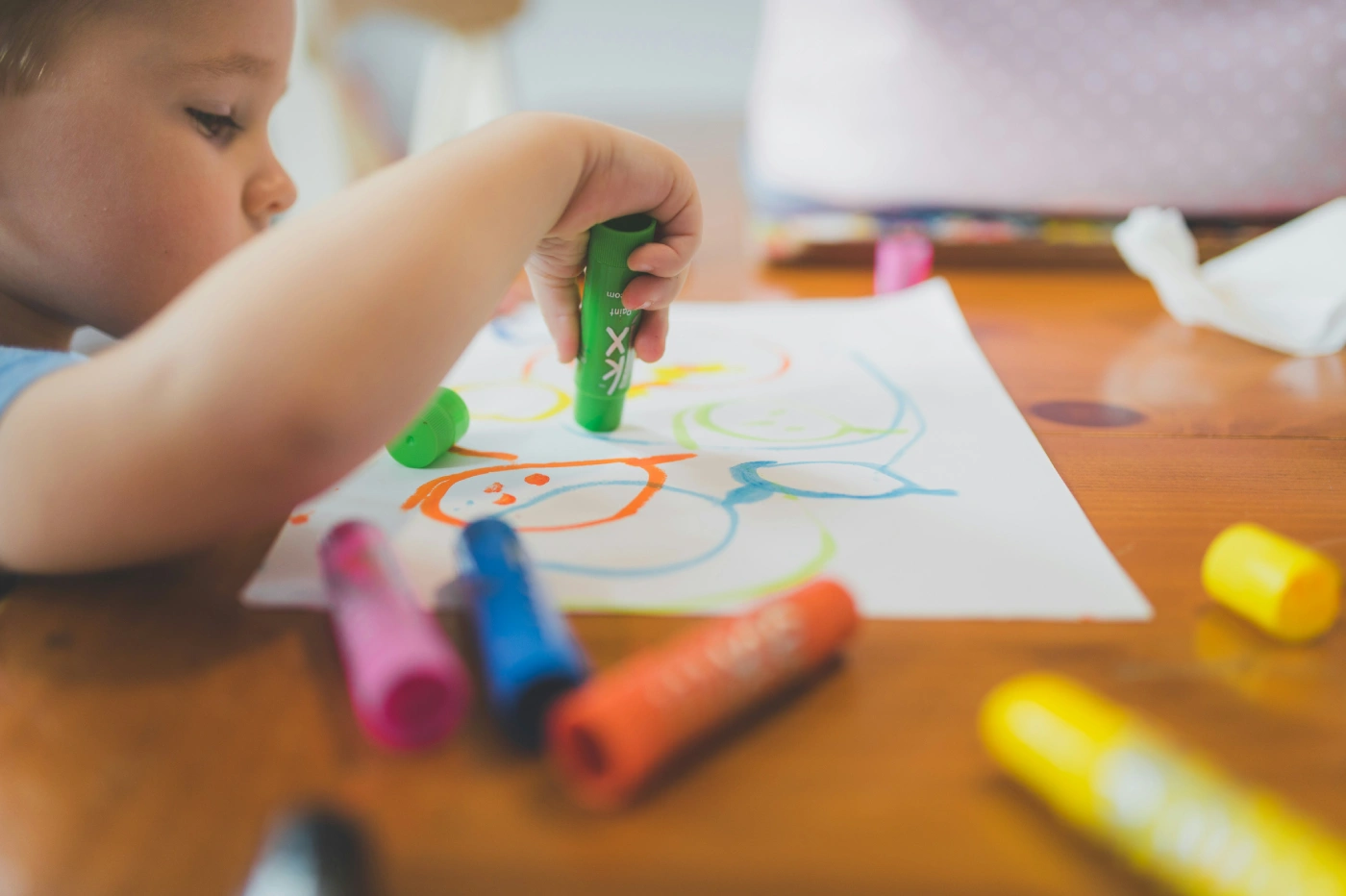
Colour is one of the first ways children begin to organise their world. Long before they can read or write, they can tell the difference between a red apple and a green one, spot the yellow bus from across the street, and request their favourite blue cup at breakfast. This instinctive engagement with colour is a natural starting point for structured learning that feels, to the child, entirely like play.
Teaching colours is not about drilling flashcards. It is about building vocabulary, observation skills, and the habit of noticing the world with curiosity. Educators at the top preschool in Bangalore understand that colour learning works best when it is embedded in movement, conversation, sensory experience, and creative exploration rather than abstract instruction. Here are some of the most effective approaches parents can use at home.
When Do Children Typically Learn Colours?
Most children begin to correctly identify and name basic colours between the ages of two and a half and four years. The sequence in which colours are learned varies between children, but red, blue, yellow, and green are usually the first four to be reliably named.
It is worth noting that recognising a colour (picking the red one from a group) typically comes before naming it (saying ‘red’ spontaneously). Many parents worry that their child does not know their colours because they struggle to name them, without realising the child can match and sort them accurately. Both abilities are developing in parallel, at slightly different rates.
If a child is approaching five years old and still struggling with basic colour names despite regular exposure, it is worth raising with their teacher or paediatrician, as this can occasionally indicate colour vision differences.
Activity 1: Colour Sorting
Colour sorting is one of the most developmentally appropriate colour activities for young children because it requires them to compare, categorise, and make decisions, all without needing to produce the colour name verbally.
Fill a muffin tin with small coloured objects from around the house: buttons, bottle caps, small toys, blocks, or pieces of felt. Set out a matching coloured dot or piece of paper in each muffin cup and ask the child to put the objects ‘with their friends.’ For younger children, start with just two or three colours. As confidence builds, increase the number.
Name the colours conversationally as the child sorts (‘you found another blue one!’) rather than quizzing them. The naming comes naturally through repetition in context, not through testing.
Activity 2: Colour Mixing
With Paint
Colour mixing is one of the most exciting colour activities for preschoolers because it involves genuine discovery. Put a small amount of red and yellow paint on a palette or paper plate and invite the child to mix them together with a brush or their finger. The emergence of orange is, for most children, genuinely surprising and delightful.
Let the child lead the exploration. Ask them what they think will happen before mixing, and then describe what they see afterwards. This kind of prediction-and-observation cycle is one of the simplest forms of early scientific thinking, and it happens entirely within the context of play.
Start with the primary colours only (red, blue, and yellow) and work through the secondary colours (orange, green, purple) one session at a time. Trying to cover everything at once overwhelms the experience.
With Playdough
Mixing colours in playdough is a more tactile version of the same experience and has the added benefit of building fine motor strength. Take a ball of red playdough and a ball of yellow, and encourage the child to knead them together until the colour changes. The gradual transformation from two separate colours into a single new one is highly engaging for children who enjoy hands-on textures.
Activity 3: A Colour Hunt
A colour hunt takes colour learning out of a tray and into the real world, which is where children encounter colours most naturally. Choose a colour for the day, name it together, and then challenge the child to find as many things of that colour as possible during a walk, in the garden, or around the house.
For children who cannot yet read, create a simple colour card: a square of that colour cut from card, or a printed image. The child carries the card and holds it up next to things they find that match.
This activity builds observational habits, vocabulary, and a generalised understanding that colours are not just things in a toy box but properties of the entire visible world. Educators who work with young children consistently find that activities rooted in real environments produce more durable learning than abstract exercises.
The approaches used at the pre school in Bangalore most committed to child-led learning incorporate this kind of outdoor observation regularly, because children learn colour names faster when they encounter them in context rather than in isolation.
Activity 4: Colour of the Day
Designate one colour each day for a week. In the morning, announce the colour of the day together (‘today is yellow day!’) and spend the day noticing it wherever it appears. Point it out at breakfast (the banana, the butter, the cereal box). Comment on it during a walk (the yellow car, the flower, the sign). Revisit it at bedtime (‘what yellow things did we find today?’)
This activity works especially well for two to three year olds who benefit from extended repetition before a word becomes secure in their vocabulary. Hearing the word ‘yellow’ twenty or thirty times in a day, in different contexts, does more to embed it than any structured lesson.
Activity 5: Colour Collage
Give the child a sheet of paper with a large coloured circle drawn on it, or a piece of card in a specific colour, and a pile of old magazines. Their task is to find and cut or tear out pictures in that colour and stick them onto the page to make a collage.
This activity builds colour identification, fine motor skills through cutting and tearing, and creative expression simultaneously. The finished collage is also something children are genuinely proud of, which makes it a particularly motivating activity for children who respond well to having a tangible result to show at the end.
The Montessori Approach to Colour Learning
Montessori education approaches colour learning through a sequence of hands-on materials designed to isolate the concept of colour from other variables. The classic Montessori colour tablets, pairs of wooden tablets covered in coloured fabric, are used first for matching identical colours, then for grading shades of the same colour from lightest to darkest.
This graded approach, moving from concrete matching to more subtle discrimination, builds a depth of colour perception that goes well beyond simply naming the basic eight colours. Children who work with these materials develop a finer visual sensitivity and a richer colour vocabulary than those who learn colours only through casual labelling.
Parents looking for a structured colour learning environment might consider how schools approach this. At the best Montessori schools in Bangalore, colour work is integrated throughout the prepared environment: in the sensorial area, in art, in outdoor observation, and in language activities, so that children encounter colour concepts repeatedly and in multiple contexts across the day.
A Quick Activity Reference
The table below summarises the activities covered in this guide alongside the age range and skills each one targets.
Activity | Age Group | Materials Needed | Skills It Builds |
Colour sorting trays | 2 to 4 years | Coloured objects, muffin tin | Colour recognition, categorisation |
Colour mixing with paint | 3 to 5 years | Primary colour paints, palette | Colour theory, prediction, creativity |
Nature colour hunt | 2 to 5 years | Colour card or chart, outdoor space | Observation, language, movement |
Colour of the day | 2 to 4 years | Everyday objects at home | Colour naming, vocabulary, attention |
Playdough colour mixing | 3 to 5 years | Primary colour playdough sets | Fine motor, cause and effect |
Colour collage making | 3 to 5 years | Magazines, glue, paper | Colour identification, creativity |
Everyday Language That Supports Colour Learning
Beyond dedicated activities, the most effective thing parents can do is name colours consistently in everyday conversation. Not ‘pass me that cup’ but ‘pass me the red cup.’ Not ‘put on your shoes’ but ‘where are your blue shoes?’
This kind of incidental language embedding is how children absorb most of their early vocabulary, including colour names. It requires no special materials, no dedicated session time, and no preparation. It simply requires a habit of noticing and naming colour throughout the normal flow of the day.
Reading picture books with vivid illustrations is another natural route. Pausing to name colours in illustrations, and occasionally asking the child to find a colour on the page, makes reading a rich colour learning experience without turning it into a lesson.
Key Takeaways
- Children typically learn to recognise colours before they can name them; both abilities are worth supporting
- Sorting, mixing, and hunting for colours in real environments are more effective than drilling flashcards
- Colour mixing with paint or playdough introduces early scientific thinking through prediction and observation
- The ‘colour of the day’ approach provides the repetition young children need to embed new vocabulary
- Incidental colour naming in everyday conversation is one of the most powerful and under-used teaching tools available to parents
- Montessori colour materials develop visual discrimination at a level of depth that extends well beyond basic colour naming
Conclusion
Colour learning is one of the most joyful territories in early childhood education because it connects naturally to so much of what children already love: painting, playing outdoors, sorting and organising, and engaging in sensory exploration. The activities in this guide require no specialist materials and very little preparation. What they do require is a parent who notices colour alongside their child and makes the language of colour a natural part of daily life.
For children who thrive in an environment where this kind of integrated, play-based learning is structured and sustained throughout the day, the best pre school in Bangalore offers an environment where colour, language, movement, and creativity are woven together rather than treated as separate subjects. That integration is what makes early learning genuinely effective and genuinely enjoyable.
Frequently Asked Questions
Q1. At what age should my child know all basic colours?
Most children reliably name the basic colours (red, blue, yellow, green, orange, purple, black, white) by the age of four to five years. There is wide variation, and a child who is still developing colour names at four is not cause for concern unless other developmental milestones are also delayed.
Q2. My child can sort colours correctly but cannot name them. Is this normal?
Yes, very much so. Colour recognition, the ability to match and sort, typically develops before colour naming. The two skills are related but distinct. Continue using colour names naturally in conversation and the verbal labels will follow the understanding.
Q3. What if my child names colours incorrectly even after a lot of practice?
Consistent colour naming errors, particularly confusing red and green, can occasionally indicate colour vision differences rather than a learning difficulty. If the pattern persists after age four with regular exposure, it is worth mentioning to a paediatrician or optometrist.
Q4. How many colours should I teach at one time?
Start with two or three colours and add new ones only once the existing ones are secure. Introducing too many colours at once creates confusion rather than accelerating learning. Red, blue, and yellow are a natural starting set because they mix to produce the secondary colours, which adds a layer of discovery.
Q5. Is screen time helpful for learning colours?
Some educational programmes do support colour learning, but passive screen-based exposure is consistently less effective than hands-on activities that involve touch, movement, and real objects. Use screens as a supplement rather than a primary teaching method for colour concepts at this age.
Q6. How do I make colour learning enjoyable for a child who is not interested in art?
Use colour in the contexts the child already enjoys. Colour hunt activities work for active, outdoor-oriented children. Colour sorting suits children who enjoy order and organisation. Cooking activities (which foods are which colour?) engage children who love helping in the kitchen. Match the activity to the child’s existing interests.
Q7. What are the Montessori colour tablets?
Montessori colour tablets are pairs of wooden tablets covered in coloured fabric, used in Montessori schools for colour matching, grading shades from light to dark, and developing fine visual discrimination. They isolate the concept of colour from shape and size so the child can focus purely on colour perception.
Q8. Can I teach colour mixing at home without making a mess?
Yes. Playdough colour mixing is a low-mess alternative to paint, and many parents find it easier to manage with young children. You can also use water and food colouring in clear cups, which produces dramatic colour mixing with very little cleanup and is particularly engaging for children who enjoy science-style exploration.